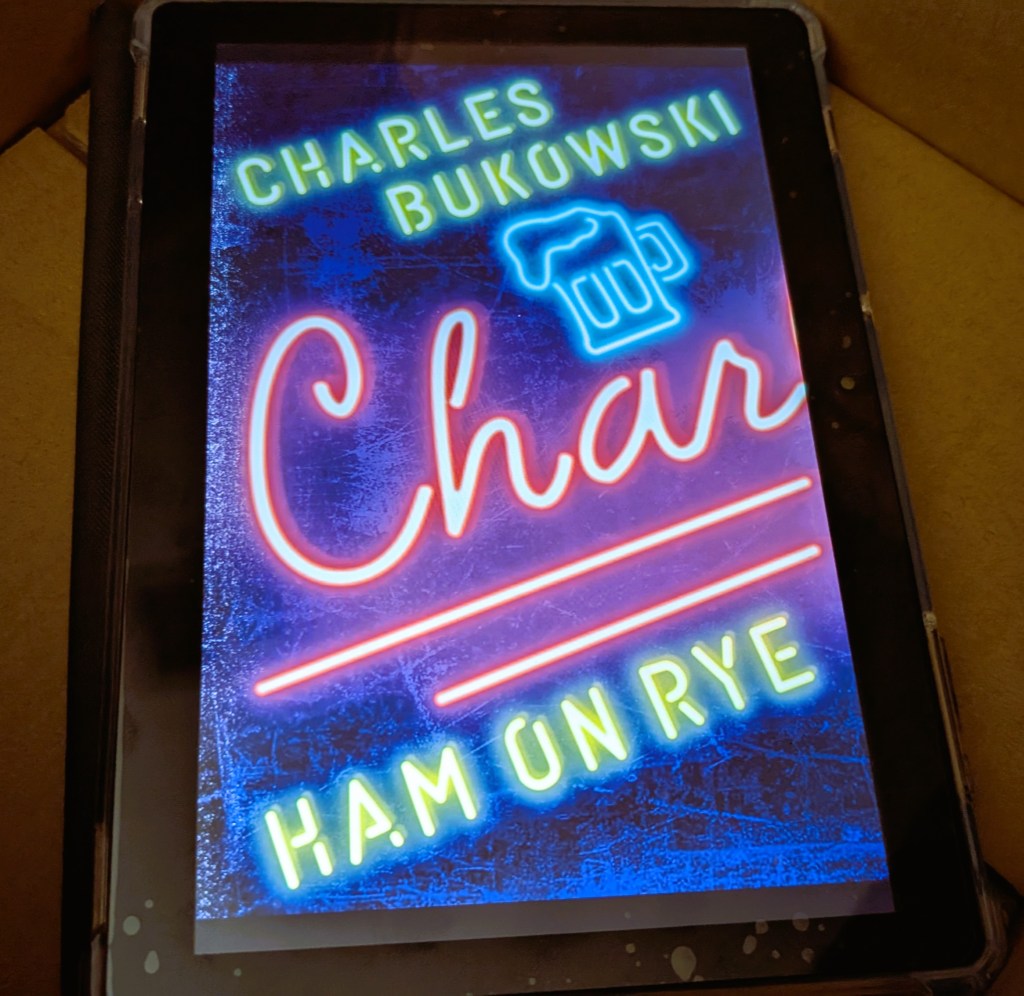
From 2001-2005, I spent most of my time reading or writing about “classic literature” in pursuit of my English degree. The interesting thing is we never really got to learn what that term means. Talk to 10 different English majors, and you’ll get 10 different definitions for “classic literature.” Recently, in getting my MFA in writing popular fiction, I heard an interesting definition: “Stories about sad people being miserable.”
While I don’t know that I agree with that definition, I do think it applies to Ham on Rye. The premise is: Henry Chinalski (a thin disguise–this is an autobiographical memoir) is a German immigrant whose family moved to California shortly after World War I. His father is an abusive drunk, his mother is an obsequious churchmouse who only wants peace and quiet. He grows up alongside puffed up, violent, selfish boys who all want to kick the crap out of each other. The whole lot of them, Henry included, barely see the girls and women in their lives as people. There’s little for life to offer Henry, and he grows bitter and resentful about it over time.
My parents wanted to be rich so they imagined themselves rich.
–Ham on Rye
Bukowski paints a picture of “American life as prison yard” that, while not far off from many people’s childhoods, is not a very uplifting tale. I’ve read a few of these types of books, and typically there is some catharsis to be had by the end. This book very much reminded me of “Rubyfruit Jungle” by Rita Mae Brown. But while RMB’s protagonist stayed upbeat and optimistic through her trials and tribulations, there is no escapism for Chinalski. RMB gives something for the reader to latch on to. A “just hang on and you’ll find something that makes you happy” lifeline. Bukowski does not.
They experimented on the poor and if that worked they used the treatment on the rich. And if it didn’t work, there would still be more poor left over to experiment upon.
(Spoilers) Ham on Rye’s Henry Chinalski is a miseryguts throughout the plot. Henry’s life is awful from his first memory. In the end, he’s a shiftless, violent drunk, ranting at his local community college about Nazi ideology more of less because he thinks it’s “funny.” If we’re being frank, that “funny” excuse is debatable considering the book was written after WWII. The last scene is of Henry learning the Japanese Navy has just attacked Pearl Harbor. He drops his Marine Corps pal off at his base, then goes to a local arcade for some escapism.
“I guess the only time most people think about injustice is when it happens to them.”
There was a time when I’d have been all about this book. Wallowing in misery definitely has its appeal depending on where you are in your life. For me right now, this book didn’t hit. I would personally say give it a miss, unless you’re trying to cross a big-L-Literature book off your bucket list. That’s pretty much why I slogged through. Glad I got it from the library because I’ll never read it again.
 HodrosBooks
Leave a comment